Downloads only. Physical CD not available.
|
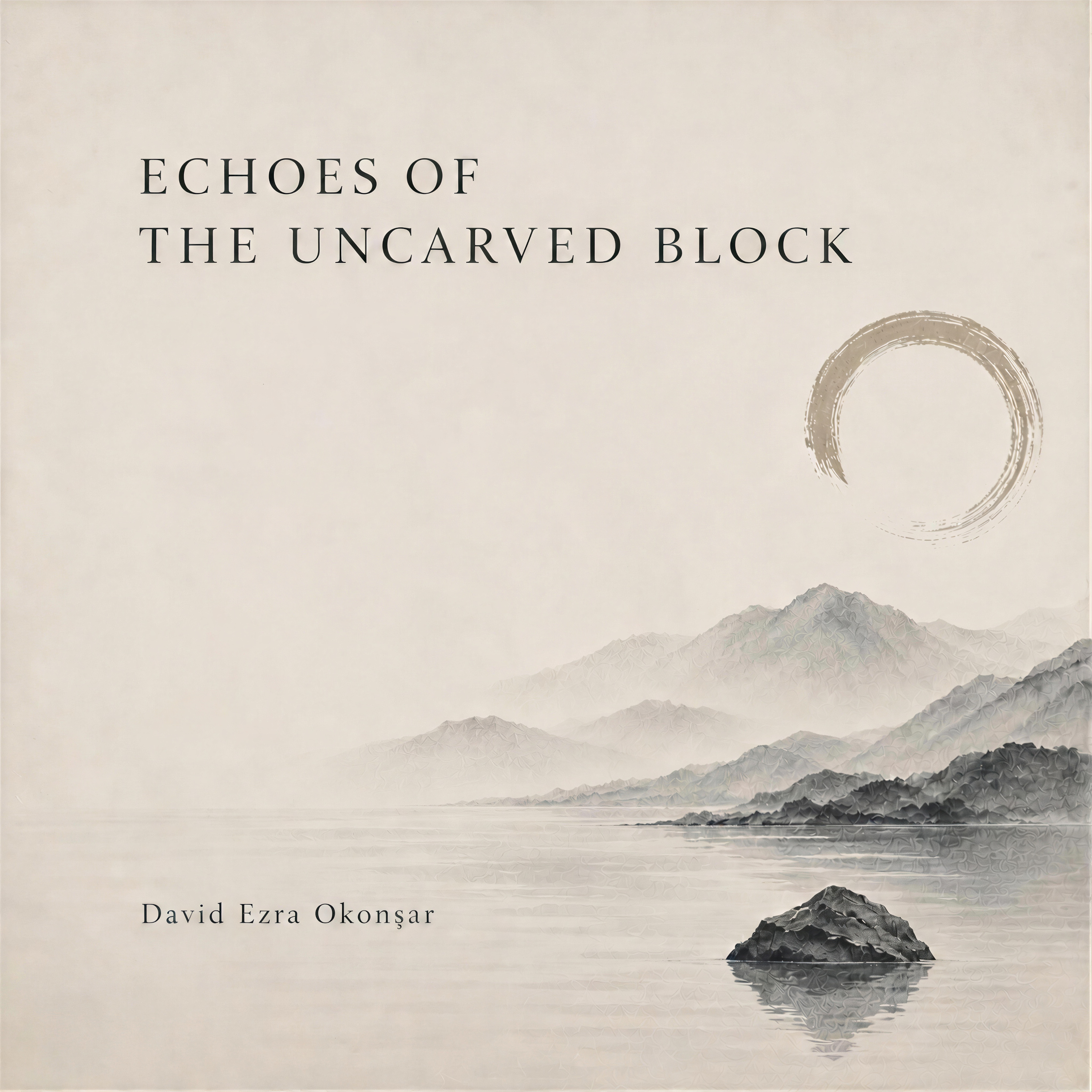
Echoes of the Uncarved Block — Twelve Piano Pieces The title "Echoes of the Uncarved Block" refers to the ancient Daoist concept of "pu" (樸), often translated as "the uncarved block": a state of natural simplicity, wholeness, and potentiality before the intervention of human design. In Daoist thought, the uncarved block symbolizes a condition in which things exist according to their own nature, unburdened by artificial distinctions and unnecessary complexity. It is not a primitive state, but rather a profound harmony between being and becoming, action and stillness, presence and emptiness. The twelve piano pieces gathered in this cycle do not seek to illustrate stories, legends, or historical events. Nor do they attempt to reproduce Chinese music in a folkloric or ethnographic sense. Instead, they are inspired by an imagined China: a vast inner landscape shaped by mountains disappearing into mist, deserts extending beyond sight, forests whose depths seem without end, rivers winding through forgotten valleys, and the silent presence of animals moving through immense territories. The China evoked here is both real and symbolic. It is a land of distances and transformations, of climates and terrains that challenge human scale. Deserts, high plateaus, subtropical forests, bamboo groves, rivers, marshlands, and mountain chains become not geographical locations but states of perception. These landscapes serve as catalysts for contemplation. They invite the listener not to observe a scene, but to inhabit it. The piano becomes a medium through which resonances, harmonics, decaying tones, and evolving textures generate sonic environments rather than conventional narratives. The music often unfolds through gradual transformations, layered sonorities, and spatial relationships between registers. Silence plays an active role, not as absence, but as a field in which sounds emerge, interact, and disappear. Individual notes may resonate like distant echoes across a valley; dense accumulations of sound may resemble shifting clouds or dense vegetation. Musical events are frequently less important than the spaces between them. Although the cycle occasionally embraces repetition, it should not be understood as minimalist music. Its processes are not primarily concerned with mechanical iteration or reduction. Instead, the pieces explore atmosphere, resonance, memory, and the perception of time. Musical forms emerge organically, as natural phenomena emerge within a landscape. The listener is invited to experience duration not as a sequence of events leading toward a destination, but as a succession of states, each possessing its own internal life. The twelve titles function as poetic gateways rather than descriptions. Each proposes an image, a sensation, or a question intended to activate the listener's imagination. A desert may become a metaphor for silence; a mountain may symbolize the unseen; a river may represent continuity and change. Animals, clouds, shadows, mist, rain, and stone appear throughout the cycle not as subjects but as presences—elements of a world that exists independently of human intention. At the same time, the work reflects an enduring fascination with the aesthetics of East Asian landscape painting, where emptiness is often as significant as form, and where vast spaces invite contemplation rather than explanation. Like a traditional ink painting in which a mountain may emerge from an expanse of unpainted paper, these pieces often allow silence and resonance to shape the listener's experience as strongly as the notes themselves. Underlying the entire cycle is the Daoist notion that reality cannot be fully grasped through analysis alone. The most important dimensions of experience often remain indirect, elusive, and suggestive. A landscape is never merely what is seen; a sound is never merely what is heard. Meaning arises through participation, through the interaction between perception and imagination. "Echoes of the Uncarved Block" is therefore less a collection of twelve piano pieces than a sequence of contemplative spaces. Each piece offers a different perspective upon a shared world: a world of immense distances, subtle transformations, hidden movements, and enduring stillness. The listener is invited not simply to hear the music, but to wander through it, as one might wander through a mist-covered mountain path whose destination is unknown and ultimately unimportant. For in the spirit of the uncarved block, the journey itself is already complete.
-------------------------------------------------- FR Echoes of the Uncarved Block — Twelve Piano Pieces Le titre "Echoes of the Uncarved Block" renvoie à l’ancien concept taoïste de "pu" (樸), souvent traduit par « le bloc de bois non sculpté ». Dans la pensée taoïste, cette image symbolise l’état de simplicité naturelle, de totalité et de potentiel qui précède toute intervention humaine, toute catégorisation et toute transformation artificielle. Il ne s’agit pas d’un retour à une condition primitive, mais plutôt d’une harmonie profonde où les choses existent selon leur propre nature, avant d’être façonnées par la volonté, l’ambition ou l’utilité. Les douze pièces réunies dans ce cycle ne cherchent ni à raconter une histoire ni à illustrer des épisodes historiques ou légendaires. Elles n’ambitionnent pas davantage de reproduire la musique chinoise dans un sens folklorique ou ethnographique. Elles prennent plutôt naissance dans une Chine imaginaire : un vaste territoire intérieur peuplé de montagnes perdues dans les brumes, de déserts s’étendant au-delà du regard, de forêts luxuriantes où la lumière se dissout sous les feuillages, de fleuves parcourant des vallées oubliées, et d’animaux dont la présence discrète semble appartenir à un temps plus ancien que celui des hommes. Cette Chine est à la fois réelle et symbolique. Elle représente l’immensité, la distance et la transformation permanente. Les paysages évoqués — déserts, hauts plateaux, forêts subtropicales, bambouseraies, marécages, fleuves et chaînes montagneuses — deviennent moins des lieux géographiques que des états de conscience. Ils offrent un espace propice à la contemplation, invitant l’auditeur non à observer un décor, mais à l’habiter intérieurement. Le piano devient ici le médium d’une exploration sonore où résonances, harmoniques, silences et prolongements de timbre engendrent de véritables paysages acoustiques. Les œuvres se développent souvent par transformations graduelles, par superpositions de couches sonores et par relations spatiales entre les différents registres de l’instrument. Le silence y joue un rôle essentiel : non comme absence, mais comme espace vivant dans lequel les sons apparaissent, se croisent et disparaissent. Une note isolée peut résonner comme un écho lointain à travers une vallée ; un agrégat sonore dense peut évoquer une brume mouvante ou une végétation impénétrable. Bien que certaines pièces recourent à des procédés répétitifs, ce cycle ne relève pas du minimalisme au sens strict. Son langage ne repose ni sur la répétition mécanique ni sur la réduction systématique du matériau. Il s’intéresse davantage aux notions d’atmosphère, de résonance, de mémoire et de perception du temps. Les formes musicales émergent progressivement, comme les phénomènes naturels surgissent au sein d’un paysage. Le temps n’y est pas conçu comme une progression vers un objectif, mais comme une succession d’états dont chacun possède sa propre vie intérieure. Les titres des douze pièces fonctionnent comme des portes d’entrée poétiques plutôt que comme des descriptions. Chacun propose une image, une sensation ou une énigme destinée à éveiller l’imaginaire de l’auditeur : "Desert of Unspoken Winds" "Mountain Beyond Appearance" "Green Darkness" "The Weight of Mist" "Animal Without Tracks" "Thousand-Li Silence" "Water Remembering Stone" "Where Clouds Become Earth" "Listening to Bamboo Shadows" "A Horizon of Cranes" "The Space After Rain" "Returning What Was Never Lost" Ces images ne décrivent pas un programme narratif précis ; elles suggèrent plutôt des présences. Le désert devient une métaphore du silence, la montagne celle de l’invisible, le fleuve celle de la continuité et du changement. Les animaux, les nuages, la pluie, les ombres ou les pierres apparaissent comme des manifestations d’un monde qui existe indépendamment de toute intention humaine. L’esthétique générale de l’œuvre doit également beaucoup à la peinture de paysage d’Extrême-Orient, où le vide possède souvent autant d’importance que la forme. Dans ces peintures, une vaste étendue de papier laissé vierge peut représenter la brume, la distance ou l’infini. De manière comparable, ces pièces accordent une valeur fondamentale aux espaces de résonance, aux silences et aux prolongements du son. Ce qui n’est pas joué participe parfois autant à l’expérience que ce qui est entendu. En filigrane de tout le cycle se trouve l’idée taoïste selon laquelle la réalité ne peut être entièrement saisie par l’analyse ou par le langage. Les aspects les plus essentiels de l’expérience demeurent souvent indirects, fugitifs et suggestifs. Un paysage n’est jamais seulement ce qui est vu ; un son n’est jamais seulement ce qui est entendu. Leur signification naît de la rencontre entre la perception et l’imagination. Ainsi, "Echoes of the Uncarved Block" se présente moins comme un recueil de douze pièces pour piano que comme une succession d’espaces contemplatifs. Chaque œuvre offre une perspective différente sur un même univers : un monde de distances immenses, de transformations imperceptibles, de mouvements cachés et de silence durable. L’auditeur est invité non seulement à écouter cette musique, mais à y cheminer, comme on suivrait un sentier de montagne disparaissant dans les nuages, sans chercher une destination précise. Car dans l’esprit du *pu*, du bloc non sculpté, le voyage est déjà son propre accomplissement. -------------------------------------------------- TR "Echoes of the Uncarved Block" başlığı, Taoist düşüncenin en eski ve en derin kavramlarından biri olan "pu" (樸) kavramına gönderme yapar. Genellikle “işlenmemiş blok”, “oyulmamış kütük” ya da “yontulmamış ağaç parçası” olarak çevrilen bu kavram, insan müdahalesinden önceki doğal sadeliği, bütünlüğü ve sınırsız potansiyeli simgeler. Taoist düşüncede "pu", ilkel bir durumu değil; varlıkların kendi doğalarına uygun biçimde, yapay ayrımların ve gereksiz karmaşıklıkların ötesinde var olduğu bir denge halini ifade eder. Bu dizide yer alan on iki piyano parçası herhangi bir hikâye anlatmayı, tarihsel bir olayı tasvir etmeyi ya da Çin müziğini folklorik anlamda yeniden üretmeyi amaçlamaz. Bunun yerine, Çin’in doğasından ve coğrafi büyüklüğünden esinlenen hayali bir iç dünyadan doğarlar: ufka kadar uzanan çöller, sisler içinde kaybolan dağlar, neredeyse tropik yoğunlukta ormanlar, bambu korulukları, geniş nehirler, uzak vadiler ve insanın varlığından bağımsızmış gibi görünen hayvanlar. Burada çağrıştırılan Çin, hem gerçek hem de simgeseldir. Uzaklığın, dönüşümün ve sonsuz çeşitliliğin ülkesidir. Çöller, yüksek platolar, subtropikal ormanlar, dağ sıraları ve nehirler yalnızca coğrafi mekânlar olarak değil, aynı zamanda zihinsel ve ruhsal durumlar olarak ele alınır. Dinleyiciyi bir manzarayı seyretmeye değil, onun içinde yaşamaya davet ederler. Bu eserlerde piyano, melodik anlatımdan çok sessel mekânlar yaratmaya yönelik bir araç olarak kullanılır. Rezonanslar, armonikler, uzun süre devam eden titreşimler ve katmanlı dokular, hayali peyzajlar oluşturan başlıca unsurlardır. Müzik çoğu zaman yavaş dönüşümlerle gelişir; farklı ses katmanları birbirlerinin içinden doğar, kaybolur ve yeniden belirir. Sessizlik ise yalnızca sesin yokluğu değil, seslerin ortaya çıktığı ve anlam kazandığı etkin bir alan olarak işlev görür. Tek bir nota uzak bir vadiden gelen yankı gibi duyulabilir; yoğun bir ses kümesi ise sisli bir ormanın ya da hareket hâlindeki bulutların hissini uyandırabilir. Bu döngüde zaman da geleneksel anlamda ilerleyen bir süreç olarak değil, birbiri ardına gelen deneyim alanları olarak algılanır. Her parça belirli bir hedefe ulaşmaya çalışmaktan çok, kendi iç atmosferini keşfeder. Bu yönüyle eserler minimalizmle bazı yüzeysel benzerlikler taşısa da, onların amacı mekanik tekrar ya da indirgeme değildir. Esas ilgi alanları rezonans, atmosfer, bellek ve zamanın algılanışıdır. Parçaların başlıkları açıklayıcı olmaktan çok çağrışımsaldır. Her biri dinleyicinin hayal gücünü harekete geçirecek kısa bir kapı işlevi görür: "Desert of Unspoken Winds" "Mountain Beyond Appearance" "Green Darkness" "The Weight of Mist" "Animal Without Tracks" "Thousand-Li Silence" "Water Remembering Stone" "Where Clouds Become Earth" "Listening to Bamboo Shadows" "A Horizon of Cranes" "The Space After Rain" "Returning What Was Never Lost" Bu başlıklar belirli bir öyküyü anlatmaz; daha çok imgeler ve sezgiler önerir. Çöl sessizliğin, dağ görünmeyenin, nehir ise süreklilik ve dönüşümün metaforu hâline gelir. Hayvanlar, bulutlar, yağmur, gölgeler ve taşlar, insan niyetinden bağımsız bir dünyanın sessiz tanıkları olarak ortaya çıkar. Eserin estetik yaklaşımı aynı zamanda Doğu Asya peyzaj resimlerinden de ilham alır. Bu gelenekte boşluk, çoğu zaman biçim kadar önemlidir. Bir dağın çevresindeki geniş beyaz alan sis, uzaklık ya da sonsuzluk hissini temsil edebilir. Benzer şekilde bu eserlerde de sessizlikler ve rezonanslar, çalınan notalar kadar önemli bir rol oynar. Bazen duyulmayan, duyulandan daha anlamlı hâle gelir. Bütün döngünün arkasında Taoist düşüncenin temel sezgilerinden biri yer alır: Gerçeklik bütünüyle açıklanamaz. En önemli deneyimler çoğu zaman dolaylı, belirsiz ve sezgiseldir. Bir manzara yalnızca görülen şey değildir; bir ses yalnızca işitilen şey değildir. Anlam, algı ile hayal gücünün karşılaşmasından doğar. Bu nedenle "Echoes of the Uncarved Block", yalnızca on iki piyano parçasından oluşan bir koleksiyon olarak değil, on iki ayrı düşünsel ve şiirsel mekân olarak görülebilir. Her parça aynı dünyanın farklı bir görünümünü sunar: uçsuz bucaksız uzaklıkların, yavaş dönüşümlerin, gizli hareketlerin ve kalıcı sessizliğin dünyasını. Dinleyici bu müziği yalnızca işitmeye değil, içinde dolaşmaya davet edilir; sisler arasında kaybolan bir dağ yolunda yürür gibi, belirli bir hedef aramadan, yolculuğun kendisini deneyimlemek üzere. Çünkü Taoist "pu" anlayışında, işlenmemiş blokta olduğu gibi, varılacak yer zaten yolun içindedir. #ContemporaryClassical #ModernClassical #PianoMusic #SoloPiano #NewMusic #ContemporaryComposer #Soundscape #AtmosphericMusic #Daoism #Pu #ChineseLandscape #NatureInspired #MeditativeMusic #Resonance #DavidEzraOkonsar |
|||||||||||||||||||||||||
| |
|||||||||||||||||||||||||
|
|||||||||||||||||||||||||