Downloads only. Physical CD not available.
|
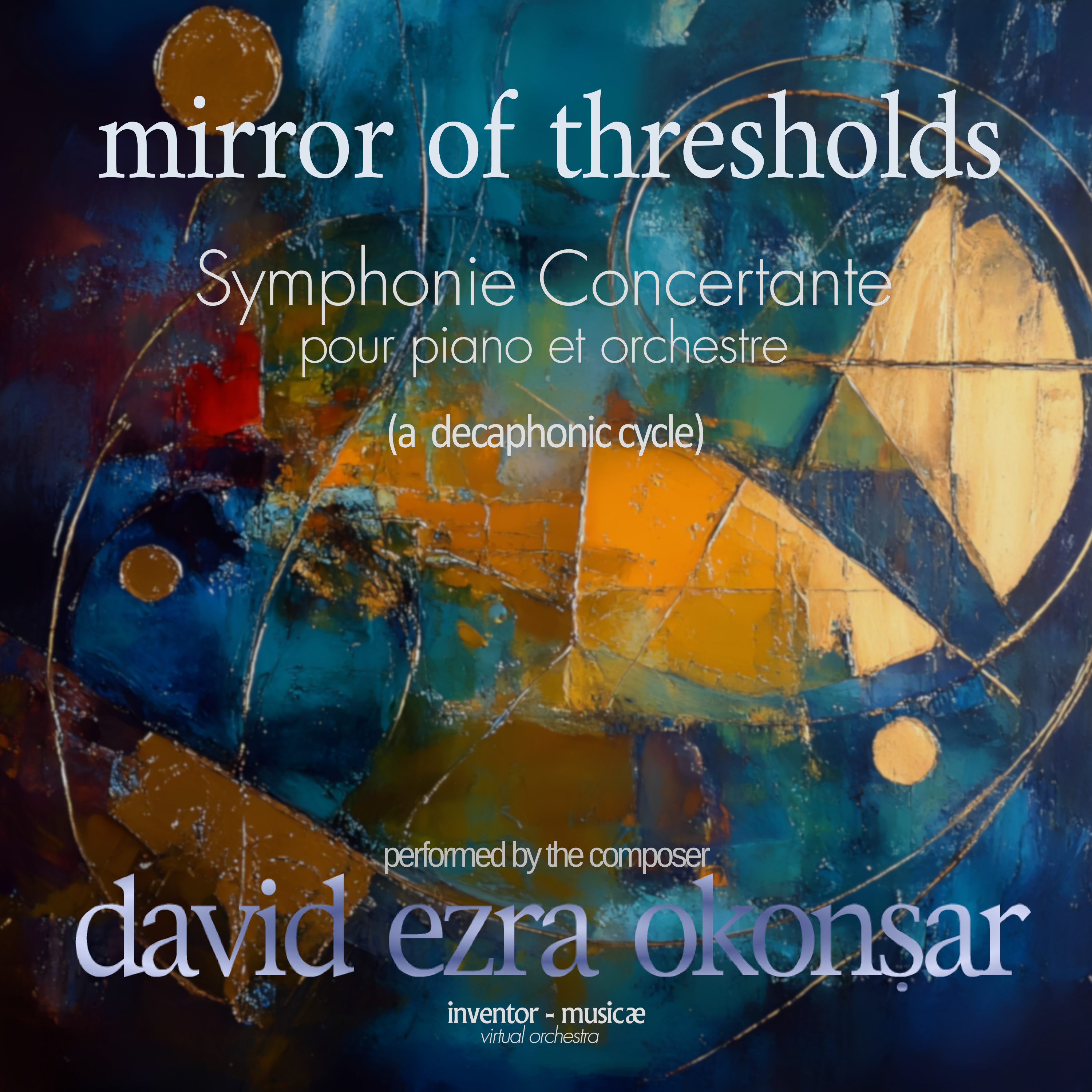
This work can be understood as “a concerto” for piano, but only in the most unconventional and reimagined sense of the word. It does not follow the traditional model where the piano stands apart from the orchestra, projecting its brilliance against a symphonic backdrop, nor does it treat the instrument as a heroic protagonist that must continually assert itself above a large ensemble. Instead, the piano here is conceived as an equal participant in a finely balanced, chamber-like environment — an instrument woven seamlessly into the fabric of the whole, at times emerging, at times receding, always part of a larger musical organism. In this sense, the piano’s role is closer to that of a primus inter pares — a “first among equals.” It retains its full expressive range and virtuosic potential, but its voice is never isolated for mere display. Rather than engaging in the familiar concerto dialogue of opposition and resolution, it interacts laterally with the other instruments, passing ideas, sharing textures, completing phrases that may have begun elsewhere in the ensemble. At moments, it is almost invisible, its figuration blending with strings, winds, or percussion; at others, it becomes a subtle focal point, not through sheer volume or brilliance, but through the quality of its timbre, the precision of its articulation, or its ability to alter the music’s harmonic or rhythmic direction with a single gesture. The orchestral writing reflects this integrated approach. Instead of deploying the full forces of the orchestra in large, massed blocks against the piano, the instrumental groups are handled as a set of interdependent chamber ensembles. Timbres are combined in ever-changing, intimate configurations: a clarinet shadowing the piano’s left hand, a muted trumpet doubling a fragment of melody in the right, a vibraphone providing a halo of resonance around sustained piano tones, or pizzicato strings punctuating an arpeggiated figure like small, deliberate brushstrokes. This constant exchange of material and color ensures that no single instrument, including the piano, dominates the texture for long. Formally, the piece takes some cues from the concerto tradition — contrasts of tempo, texture, and energy are central to its structure — but they unfold in less predictable ways. Rather than the classic fast–slow–fast sequence, the music shifts fluidly between states: a slow passage may fracture into sudden, scherzo-like bursts; a lively rhythmic section may dissolve into suspended, static harmony. This fluidity creates a sense of ongoing metamorphosis, with the piano and ensemble adjusting to one another’s transformations in real time. The harmonic language is modern and atonal, yet highly focused. Each movement is strictly decaphonic, built from a selected set of ten pitches. This self-imposed limitation gives the music a distinctive internal logic, allowing subtle relationships to emerge between melodic lines, chords, and orchestrations. The absence of two pitches from the full chromatic set lends a curious quality to the sound world: a completeness that is never quite whole, a center that is both present and elusive. The piano’s chords often exploit this limitation to create resonances that sound both rich and slightly “tilted,” while the orchestra’s lines may highlight the missing intervals through implication or avoidance. Rhythmically, the piano’s part is no less demanding than in a traditional concerto, but its challenges lie less in projecting above the orchestra and more in integrating with it. Passages of intricate counterpoint require tight coordination with winds or mallets; delicate, pointillistic textures call for a shared sensitivity to attack and decay across the ensemble. In the denser, more animated sections, the piano is not simply riding over the orchestral surge but actively shaping it from within — a participant in a collective propulsion rather than a solitary force. This approach inevitably changes the listener’s experience. The piano is not a star stepping forward from the orchestral ranks to deliver a dazzling monologue before retreating; it is present from beginning to end, in constant conversation. Sometimes its voice is clearly audible; sometimes it is half-hidden, a glint of sound in the texture’s weave. The drama lies not in the clash between soloist and orchestra, but in the continual rebalancing of roles, the ebb and flow of attention as different instruments take up, transform, and return the musical thread. The result is a work that blurs the boundaries between concerto and chamber symphony, between soloist and ensemble. It honors the piano’s tradition as a vehicle for lyricism, virtuosity, and harmonic richness, but places it in a new relational framework — one that reflects the more collaborative, fluid, and multi-voiced possibilities of contemporary music. In this setting, the piano shines not by standing apart, but by becoming inseparable from the world around it.
-------------------------------------------------- FR Cette œuvre peut être comprise comme un « concerto » pour piano, mais seulement dans le sens le plus inhabituel et repensé du terme. Elle ne suit pas le modèle traditionnel où le piano se détache de l’orchestre, projetant son éclat par-dessus un fond symphonique, ni ne traite l’instrument comme un héros solitaire qui doit sans cesse s’imposer face à la masse orchestrale. Ici, le piano est conçu comme un partenaire égal, dans un environnement d’équilibre raffiné, à la manière d’un ensemble de musique de chambre — un instrument tissé dans le tissu sonore global, émergeant par moments, se retirant à d’autres, toujours partie intégrante d’un organisme musical plus vaste. En ce sens, le rôle du piano se rapproche de celui d’un primus inter pares — un « premier parmi ses pairs ». Il conserve toute sa gamme expressive et son potentiel virtuose, mais sa voix n’est jamais isolée pour la seule démonstration. Plutôt que d’engager le dialogue habituel de confrontation et de résolution, il interagit latéralement avec les autres instruments, transmettant des idées, partageant des textures, achevant des phrases commencées ailleurs dans l’ensemble. Parfois presque invisible, sa figuration se fond dans les cordes, les bois ou les percussions ; à d’autres instants, il devient un point d’attention subtil, non par sa puissance ou sa brillance, mais par la qualité de son timbre, la précision de son articulation ou sa capacité à infléchir la direction harmonique ou rythmique d’un simple geste. L’écriture orchestrale reflète cette approche intégrée. Au lieu de mobiliser la totalité des forces en blocs massifs opposés au piano, les groupes instrumentaux sont traités comme une série d’ensembles de chambre interdépendants. Les timbres se combinent en formations intimes et changeantes : une clarinette qui ombre la main gauche du piano, une trompette bouchée doublant un fragment de mélodie à la main droite, un vibraphone créant un halo de résonance autour de notes tenues, ou des cordes pizzicato ponctuant une figure arpégée comme de petites touches picturales. Ce constant échange de matériaux et de couleurs empêche tout instrument, y compris le piano, de dominer durablement la texture. Sur le plan formel, l’œuvre conserve certains échos de la tradition concertante — les contrastes de tempo, de texture et d’énergie en constituent l’ossature — mais ils se déploient de manière moins prévisible. Au lieu d’une succession classique vif–lent–vif, la musique glisse entre les états : un passage lent peut se fragmenter en éclats soudains, presque scherzando ; une section rythmée et vive peut se dissoudre en harmonies suspendues et statiques. Cette fluidité engendre un sentiment de métamorphose continue, où le piano et l’ensemble s’ajustent mutuellement à chaque transformation. Le langage harmonique est moderne et atonal, mais d’une grande cohérence interne. Chaque mouvement est strictement décaphonique, construit à partir d’un jeu de dix hauteurs sélectionnées. Cette contrainte volontaire confère à la musique une logique propre, permettant aux relations subtiles de se déployer entre lignes mélodiques, accords et orchestrations. L’absence de deux notes de la gamme chromatique confère à l’univers sonore une qualité particulière : une plénitude qui n’est jamais tout à fait complète, un centre à la fois présent et fuyant. Les accords du piano exploitent souvent cette limitation pour créer des résonances riches mais légèrement « biaisées », tandis que les lignes orchestrales peuvent souligner les intervalles manquants par l’implication ou l’évitement. Sur le plan rythmique, la partie de piano n’est pas moins exigeante que dans un concerto traditionnel, mais ses défis résident moins dans la projection au-dessus de l’orchestre que dans l’intégration à celui-ci. Les passages contrapuntiques demandent une coordination serrée avec les bois ou les claviers à percussion ; les textures délicates et pointillistes requièrent une sensibilité commune aux attaques et aux résonances à travers l’ensemble. Dans les sections denses et animées, le piano ne se contente pas de « surfer » sur l’élan orchestral : il participe activement à le façonner de l’intérieur — partie prenante d’une impulsion collective plutôt que force solitaire. Cette approche modifie inévitablement l’expérience de l’auditeur. Le piano n’est pas une vedette qui s’avance hors des rangs pour livrer un monologue éblouissant avant de se retirer ; il est présent du début à la fin, dans un dialogue constant. Parfois clairement audible, parfois à demi caché, il brille par éclats dans le tissage de la texture. Le drame ne réside pas dans l’affrontement entre soliste et orchestre, mais dans le rééquilibrage continu des rôles, le flux et reflux de l’attention à mesure que les instruments se saisissent, transforment et restituent le fil musical. Il en résulte une œuvre qui brouille les frontières entre concerto et symphonie de chambre, entre soliste et ensemble. Elle honore la tradition du piano comme véhicule de lyrisme, de virtuosité et de richesse harmonique, tout en l’inscrivant dans un nouveau cadre relationnel — celui d’un dialogue collectif, fluide et polyphonique, où l’instrument brille non pas en se tenant à l’écart, mais en devenant inséparable du monde sonore qui l’entoure.-------------------------------------------------- TR Bu eser, bir “piyano konçertosu” olarak tanımlanabilir, ancak yalnızca kelimenin en alışılmışın dışındaki ve yeniden düşünülmüş anlamında. Geleneksel modelde olduğu gibi piyano, orkestradan ayrışarak senfonik bir fon üzerinde parlayan bir figür değildir; ne de tüm gücünü kullanarak orkestra karşısında sürekli üstünlük kurmaya çalışan bir kahraman gibidir. Burada piyano, dengeli ve rafine bir ortamda, oda müziği yaklaşımıyla düşünülmüş eşit bir ortak olarak konumlanır — kimi zaman öne çıkan, kimi zaman geri çekilen, fakat daima daha büyük bir müzikal organizmanın ayrılmaz bir parçası olan bir enstrümandır. Bu anlamda piyanonun rolü, bir primus inter pares — “eşitler arasında birinci” — konumuna yakındır. Tüm ifade gücünü ve virtüöz potansiyelini korur, fakat sesi hiçbir zaman salt gösteriş için izole edilmez. Geleneksel konçerto anlayışındaki karşıtlık ve çözülme diyaloğu yerine, piyano yatay bir etkileşim içindedir; fikirleri iletir, dokuları paylaşır, başka enstrümanların başlattığı cümleleri tamamlar. Bazen neredeyse görünmez hâle gelir, figürasyonunu yaylılar, üflemeliler ya da vurmalılarla kaynaştırır; bazen de ses yüksekliği veya parlaklığıyla değil, tınısının niteliği, artikülasyonunun keskinliği veya tek bir jestle armonik ya da ritmik yönü değiştirme gücüyle öne çıkar. Orkestra yazımı bu bütünleşmiş yaklaşımı yansıtır. Piyanoya karşı büyük kütleler hâlinde toplu orkestral güç kullanmak yerine, çalgı grupları birbirine bağlı oda toplulukları olarak ele alınır. Tınılar, sürekli değişen küçük ve yakın kombinasyonlarda bir araya gelir: piyanonun sol elini gölgeleyen bir klarnet, sağ eldeki bir melodi parçasını çiftleyen sordino trompet, uzun piyano seslerine yankı halkası katan bir vibrafon ya da arpej figürünü küçük fırça darbeleri gibi noktalayan pizzicato yaylılar… Bu sürekli malzeme ve renk alışverişi, piyanonun da dahil olduğu hiçbir enstrümanın uzun süre dokuda baskın olmasına izin vermez. Biçim açısından eser, konçerto geleneğinden bazı izler taşır — tempo, doku ve enerji zıtlıkları yapının omurgasını oluşturur — ancak bunlar daha az öngörülebilir şekilde gelişir. Klasik hızlı–yavaş–hızlı sıralaması yerine, müzik hâller arasında akışkan biçimde geçiş yapar: yavaş bir pasaj bir anda kırılarak scherzo benzeri patlamalara dönüşebilir; hareketli ve ritmik bir bölüm ise askıya alınmış, durağan armonilere eriyebilir. Bu akışkanlık, piyanonun ve topluluğun her dönüşüme anında uyum sağladığı sürekli bir metamorfoz hissi yaratır. Armonik dil, modern ve atonal olmakla birlikte güçlü bir iç mantığa sahiptir. Her bölüm, seçilmiş on sesten oluşan kesin bir decafonik dizi üzerine kuruludur. Bu bilinçli kısıtlama, müziğe kendine özgü bir mantık kazandırır; melodik çizgiler, akorlar ve orkestrasyonlar arasındaki ince ilişkilerin açığa çıkmasına olanak tanır. On iki sesli diziden iki perdenin eksikliği, ses dünyasına özgün bir nitelik kazandırır: tam gibi görünen ama aslında tamamlanmamış bir bütünlük, hem var olan hem de kaçan bir merkez. Piyanonun akorları bu sınırlamayı çoğu zaman hafif “eğik” tınlayan zengin rezonanslar yaratmak için kullanır; orkestranın çizgileri ise eksik aralıkları ima ederek ya da bilinçle kaçınarak vurgular. Ritmik açıdan piyano partisi, geleneksel bir konçertodaki kadar zorludur; ancak burada güçlük, orkestranın üzerinde projeksiyon yapmaktan çok onunla bütünleşmektedir. Karmaşık kontrpuan bölümleri, nefesliler veya tuşlu vurmalılarla sıkı bir eşgüdüm gerektirir; ince, noktasal dokular ise tüm toplulukta saldırı ve çözülme anlarına ortak bir duyarlılık ister. Yoğun ve hareketli kısımlarda piyano, orkestral dalganın üzerinde sadece “yüzmez”; onu içeriden şekillendiren aktif bir katılımcıdır — yalnız bir güç değil, kolektif bir itkinin parçasıdır. Bu yaklaşım, dinleyici deneyimini kaçınılmaz olarak değiştirir. Piyano, sıralardan öne çıkıp parıltılı bir monolog verdikten sonra geri çekilen bir yıldız değildir; baştan sona mevcuttur, sürekli bir diyalog içindedir. Kimi zaman açıkça duyulur, kimi zaman dokunun içinde yarı gizlidir, bazen bir ışıltı gibi belirir. Dram, solist ile orkestra arasındaki çatışmada değil, rollerin sürekli yeniden dengelenmesinde, müzik ipliğinin farklı enstrümanlar arasında alınması, dönüştürülmesi ve iade edilmesinde yatar. Ortaya çıkan eser, konçerto ile oda senfonisi arasındaki sınırları bulanıklaştırır; solist ile topluluk arasındaki çizgiyi silikleştirir. Piyanoyu lirik anlatımın, virtüözitenin ve armonik zenginliğin bir aracı olarak onurlandırırken, onu yeni bir ilişkisel çerçeveye yerleştirir — toplu, akışkan ve çok sesli bir diyaloğun parçası olarak, parlamasını orkestradan ayrı durarak değil, onun ayrılmaz bir parçası hâline gelerek sağlar. |
|||||||||||||||||||||||||
| |
|||||||||||||||||||||||||
|
|||||||||||||||||||||||||